Your rubric captures the criteria and their weights, but not the material you grade against: the reading the class analyzed, the reference text the paper applies, the citation guide you enforce. Supporting docs is the place to hand that to the assistant. It reads what you add against every paper graded on the rubric, so you explain the standard once instead of re-explaining it every batch.
Where to find it
Supporting docs is the chip on the Rubric row of the assignment page; choose it and the drawer opens right there. The material belongs to the rubric, not the assignment. Use the same rubric next term and everything you added comes with it.
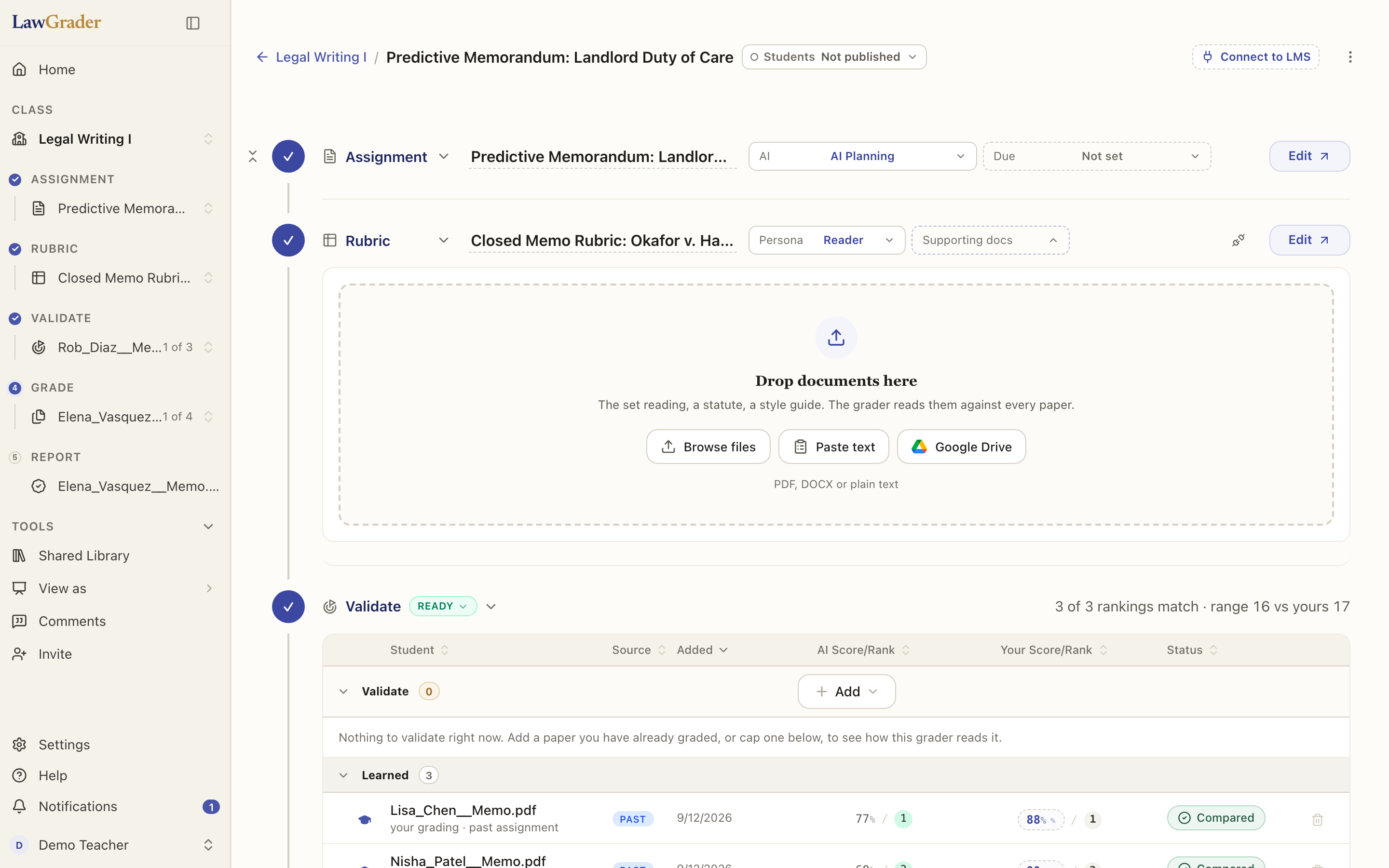
Adding a document
Drop a file onto the drawer, or add one from Google Drive or OneDrive. PDF, Word .docx, and plain text are all read. You can paste text instead if what you want to hand over is not a file.
Each document keeps its original: choose the eye to read it again, or the download arrow to save a copy. Removing a document deletes the file too.
Tell the grader how to use it
Every document carries one of three settings, which you can change at any time from the menu on its row. The setting matters: each one is a fixed rule about how the material may be used.
- Reading assignment: the set text students wrote about. The assistant judges the paper against it as a reference, never as required wording.
- Reference materials: a guide or source the grader may draw on, such as a citation manual or a style sheet. Again reference, not required wording.
- Other: anything that fits neither, passed along with no special handling.
Everything here autosaves. There is no save button to find.
Wrong answers and feedback cues
These used to live here as rubric-wide lists. They belong to a criterion, not to the whole rubric, so they are written in a criterion's own AI note in the rubric builder now, where the assistant reads them while scoring that one row. Anything you added before still works exactly as it did, and you can still edit or remove it here.
The context budget
A meter shows how much room your material takes out of the budget the grader can carry. If it goes over, trim a document before the rubric grades again; the meter turns red so you can see which side of the line you are on.
What it does not do
- Students never see it. Supporting docs shape grading; they do not appear on reports or anywhere student-facing.
- Web links are not followed. A pasted URL is just text to the assistant. Upload the document itself, and refresh it yourself when the source changes.
- It applies to the whole rubric. Every paper graded on the rubric is read against all of it; there is no per-criterion switch.
- Whole graded papers do not belong here. A model answer or a scored exemplar is a validation paper: see Validating the grader against your grading.
Everything you add here is passed to the grader word for word, under its own heading, on every paper scored with this rubric.