Open any paper and you are on the grading page: the paper in the middle, a Comments column beside it, and the Grade rail on the right. The assistant's observations are already there if the paper has been graded. This article is about what you do on top of them.
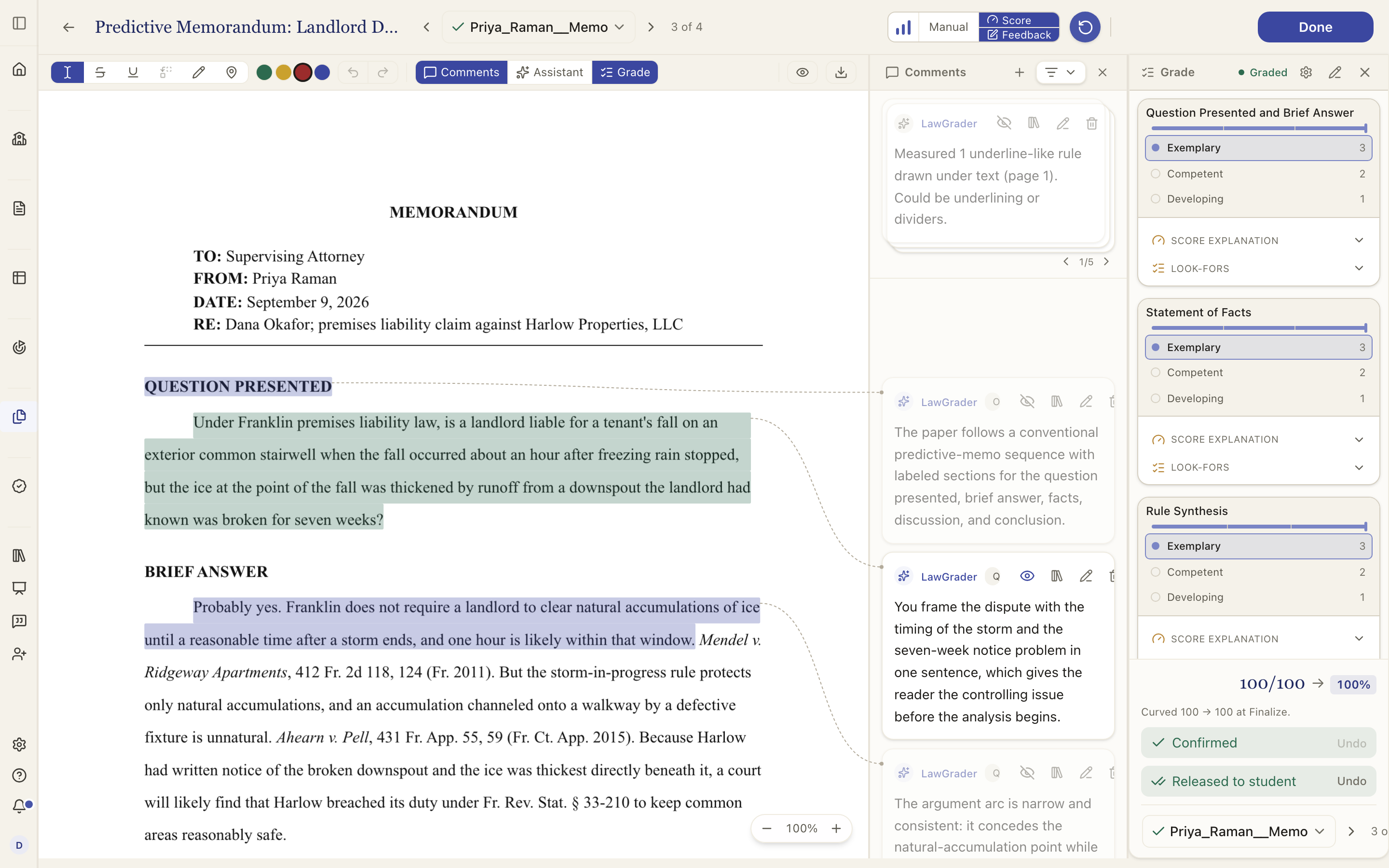
The three panels
The buttons in the middle of the toolbar toggle the panels: Comments, Assistant and Grade. Close what you are not using to give the paper the room. The ← and → arrows either side of the paper's name move to the previous and next paper on the assignment, in the order the assignment page's submissions table is sorted (click a column heading there to change it), and Done returns to the assignment page. Everything saves as you work; the chip beside Done says so.
The pen tools
Down the left of the toolbar:
- Highlight (the I-beam, selected by default). Select text and a comment box opens on the passage.
- Strike draws a line through selected text. Underline draws one under it. Neither needs a comment; they are marks in the active colour.
- Suggest. Select a passage and type what it should say instead. The passage is struck through with your replacement written just above the line. See below.
- Draw. Circle a region of the page and comment on it: a figure, a layout problem, a block of text the text layer cannot select.
- Pin. Click anywhere to drop a margin pin and comment on that spot without highlighting a paragraph.
The four swatches set the colour of the next mark: Good (green), Watch out (gold), Issue (red, the default) and Neutral (blue). The colour is a cue for you and for the student; it changes nothing about the score. Zoom and pan controls sit under the page. Zooming in widens the paper beside your comments, and dragging the divider between them zooms too; Fit sizes the paper to the space again.
Your comments
A comment on a passage opens the composer. Type, or take one of the suggestions in your own voice (see Comment suggestions in your own voice), then choose Add comment. Mark it as an Issue, Praise or Suggestion with the three small buttons; the kind sets the card's colour and lets you filter the column later.
The + at the top of the Comments column adds a whole-document comment: a note about the paper as a whole rather than one passage. It lives in the deck pinned at the top of the column and prints on the cover page of the report.
On any card: the pencil edits it, the trash removes it, and the bookmark saves its text to your comment library for next time. Where several comments share one passage, the card shows a count and arrows to step through the stack.
What the student will see
Every card carries an eye. Eye open means the comment is visible to the student and will print in the margin of their report beside the passage. Eye closed means it is hidden: a note to yourself, or something you are not ready to send. Click to switch. The assistant's observations start visible by default, and you curate them down; your own comments start visible too. See Reviewing and adjusting the feedback for the whole curation pass.
A comment whose quote could not be located on the page (a scanned paper, text inside a graphic) cannot sit in the margin, so its eye turns brass and it prints as a note on the cover instead.
Suggesting a rewrite
Suggest is a comment like any other, which is the useful part: it goes in the margin list, it has an eye, and it only reaches the student when you release. A student who handed in Word gets it back in their own file as a real tracked change, with your other released comments in Word's review pane; a student who handed in a PDF sees the strike and the replacement in the report.
Because a rewrite is still a comment, one you have hidden does not travel. The release control on the assignment page tells you how many are being held back, and Show walks you to each one.
Undo
The undo arrow in the toolbar reverses your last edit whatever it was: a highlight, a stroke, a comment, or a score you picked on the rail. Its tooltip names what it will take back, so it never acts blind. Redo brings it forward again.
Finishing a paper
When the score and the feedback are what you want, choose Confirm grade at the foot of the rail. Confirming is what makes the grade yours; releasing is a separate step, done for the whole class on the assignment page or, for one student, with Release just this student now under the confirm button. See Releasing grades and reports.